Time Shaper Challenge
Turning a traditional retail sales bingo into a mobile gamification system for Swiss boutique teams.
- Sole UX/UI Designer
- Nov 2024 – Feb 2025
- Launched · Switzerland
- Gamification mechanics co-definition · Information architecture · Interaction design · Visual design · Developer handoff
A sales bingo, rebuilt as a system
Cartier had an established sales bingo — a printed sheet used to motivate boutique staff. POAP Studio asked me to rebuild it as a secure, mobile-first system: sales targets translated into achievements, points and levels, feeding individual and team leaderboards and unlocking real rewards. As the sole UX/UI designer, I co-defined the mechanics and rules with the POAP Studio founders, then owned the complete visual and interaction system, while holding a premium, restrained expression consistent with Cartier. It launched within Cartier’s Swiss retail programme in February 2025.
Constraints the design had to hold:
- Secure access through Cartier SSO.
- A mobile web experience used by boutique staff on the shop floor.
- A premium visual tone with restrained brand expression.
- Parallel individual and team competition.
- Multiple completion mechanisms and time-based activities.
From bingo card to engagement system
The key move was to stop treating the programme as a tracker.
I translated the original bingo logic into a system where actions generate achievements, achievements generate points and level completion, and progress unlocks individual or team rewards. The same model also feeds two leaderboards, so staff understand both their personal position and their boutique’s collective performance.
- Activitiesactions, quizzes, timed challenges
- Achievementsto do · submitted · completed
- Points & levelsindividual, team, bonus
- Rewardslocked and unlocked
- Leaderboardspersonal and boutique
Explain the rules before asking anyone to compete
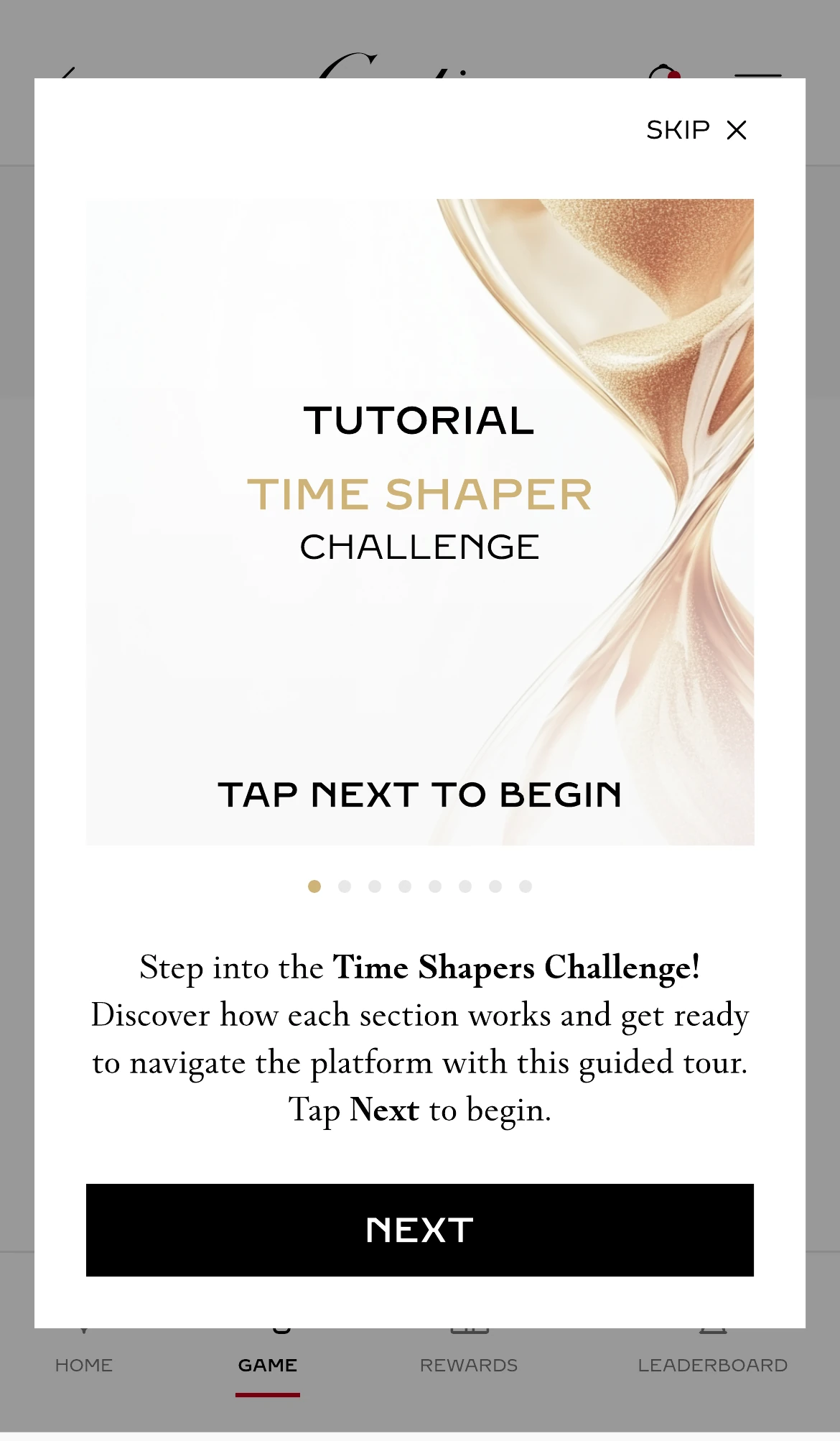
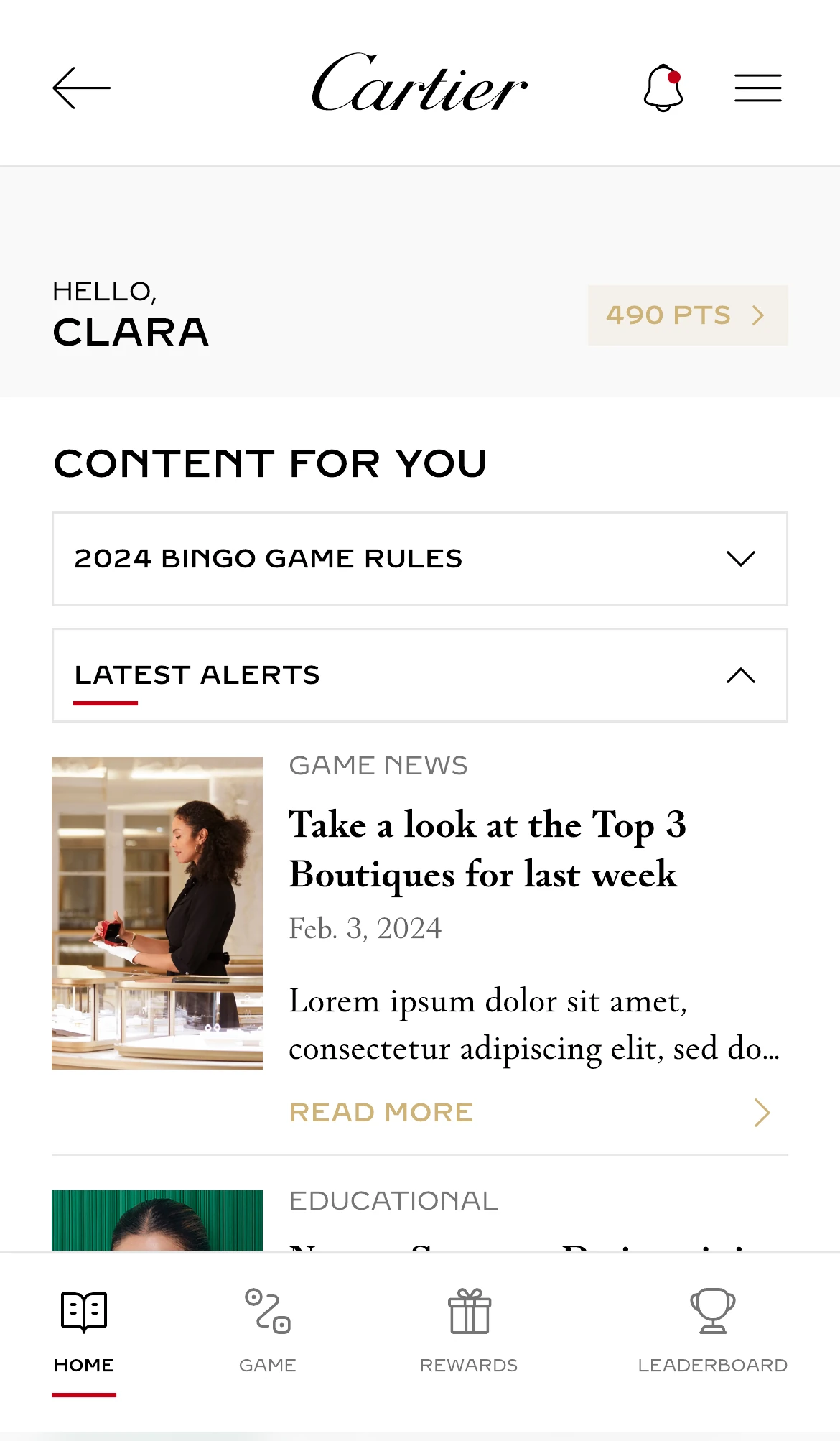
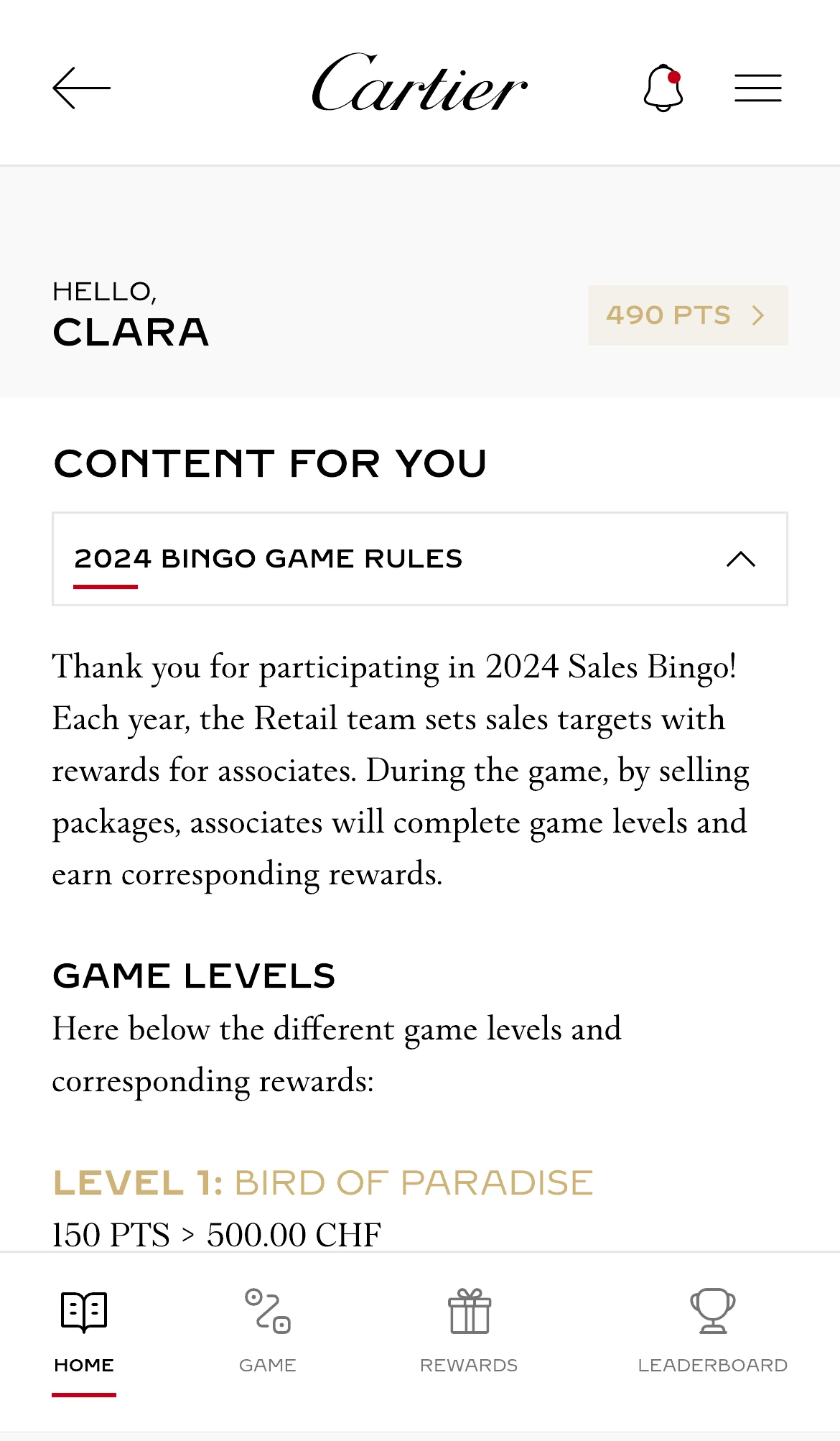
The programme combined sales rules, achievements, rewards, rankings and editorial content. I used a guided tour to introduce the navigation, then made Home the stable reference point for game rules, alerts and Cartier content. That reduced the amount of explanation the game board itself had to carry.
One system, three perspectives
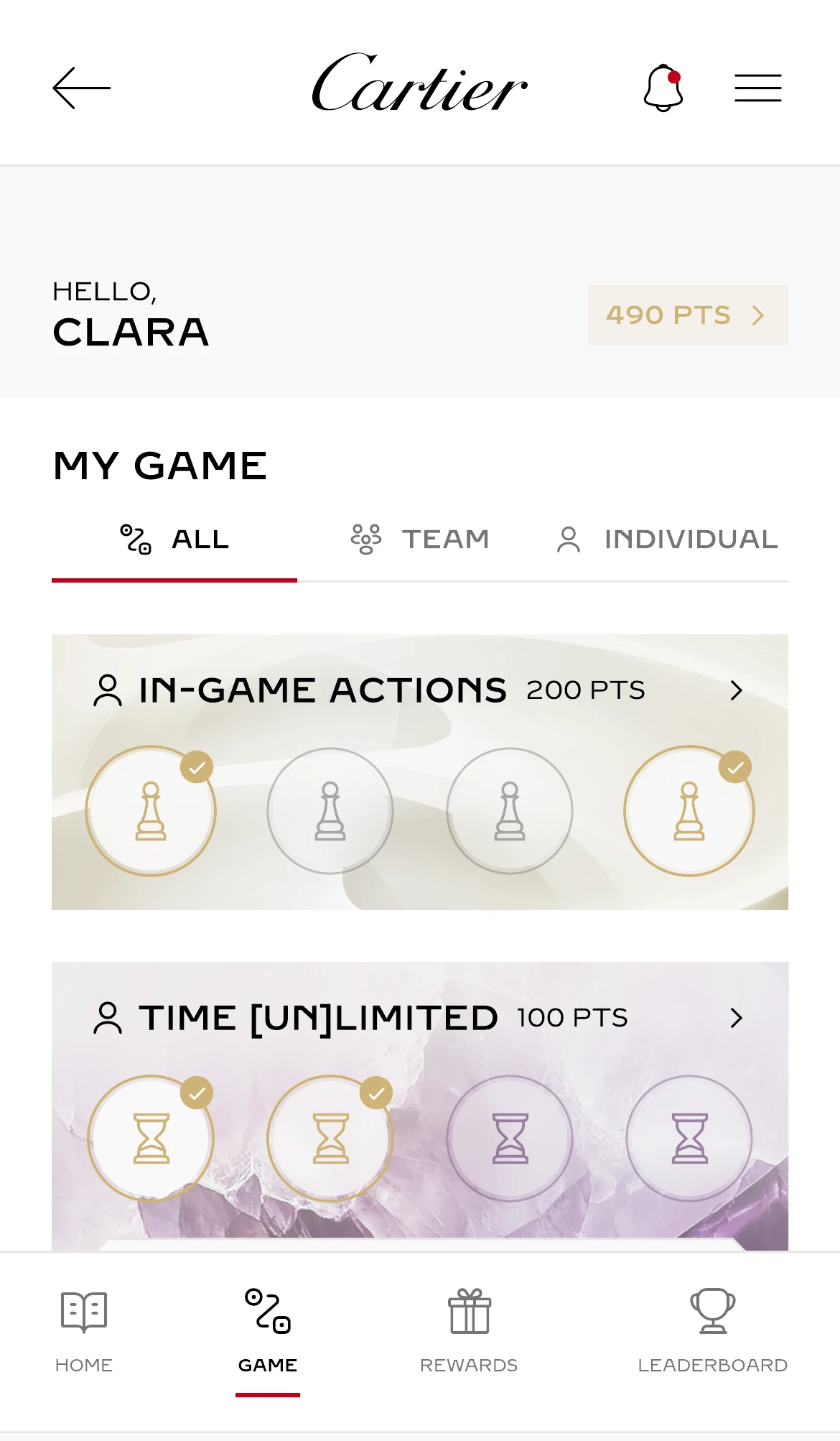
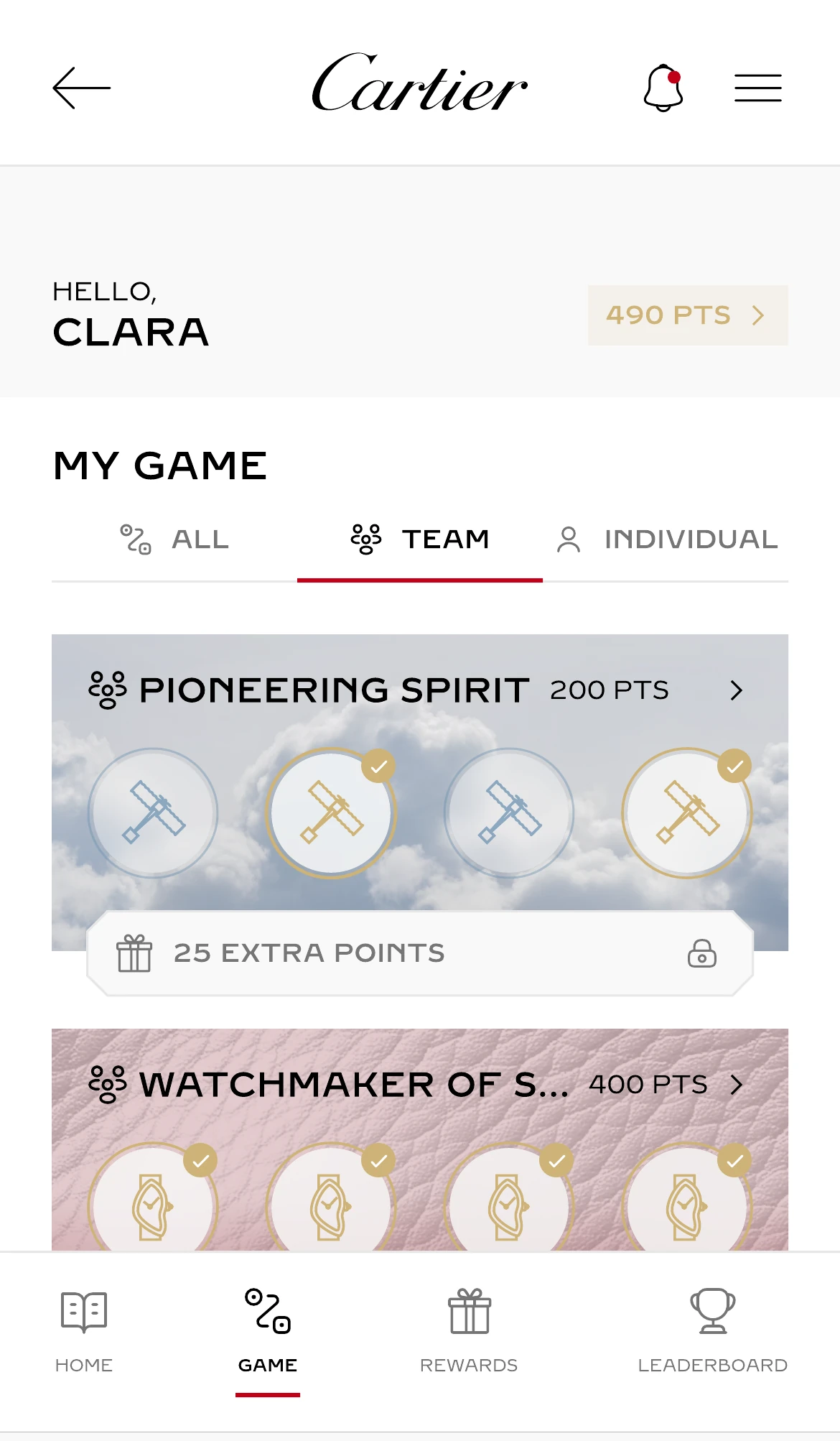
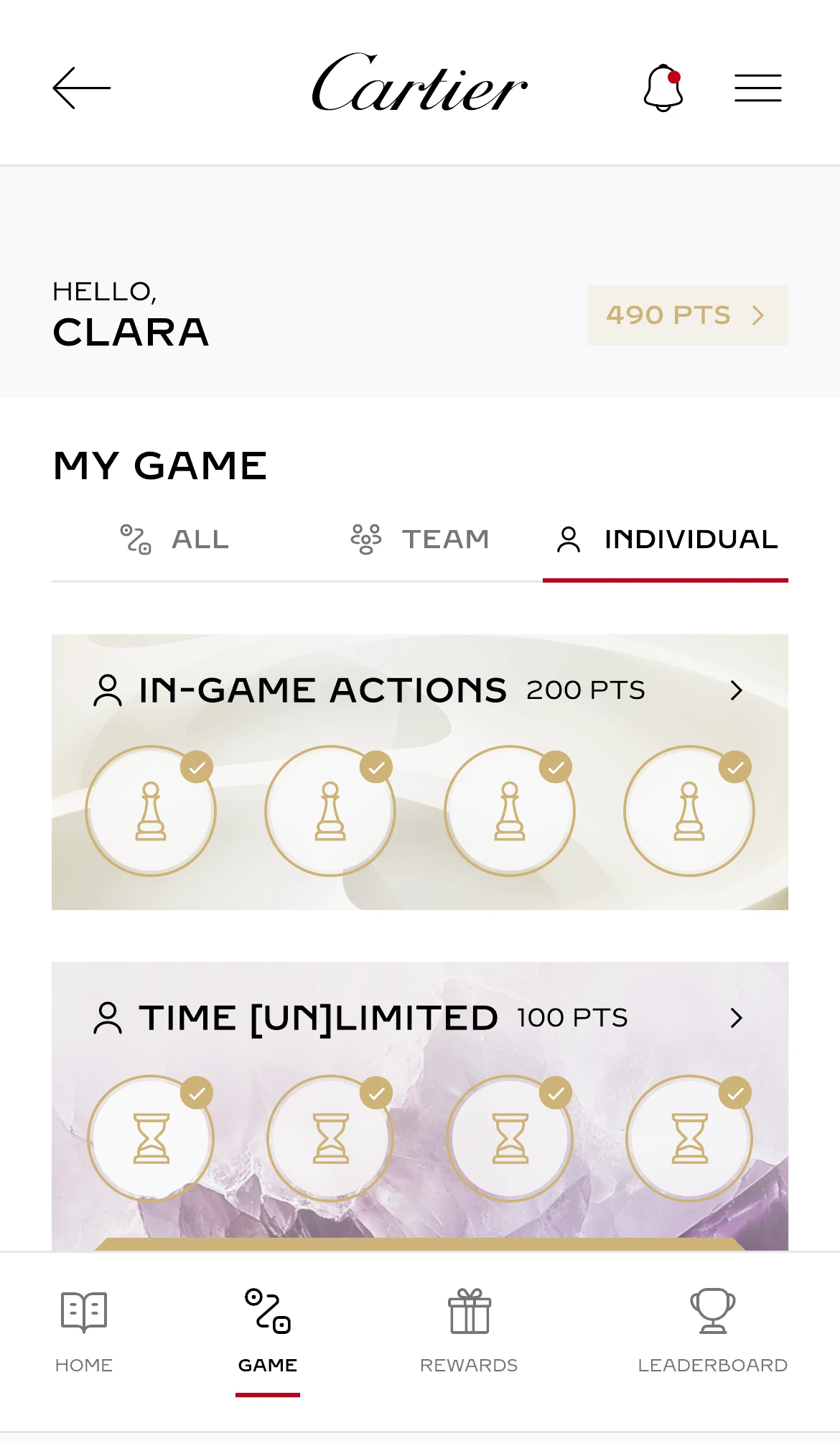
The game board separates shared and personal progression without forcing users to learn a different interface for each mode. The same level-card pattern is reused across All, Team and Individual views, while labels, icons and point values clarify who contributes and who benefits.
Making progress and consequence visible
One status language across levels and achievements
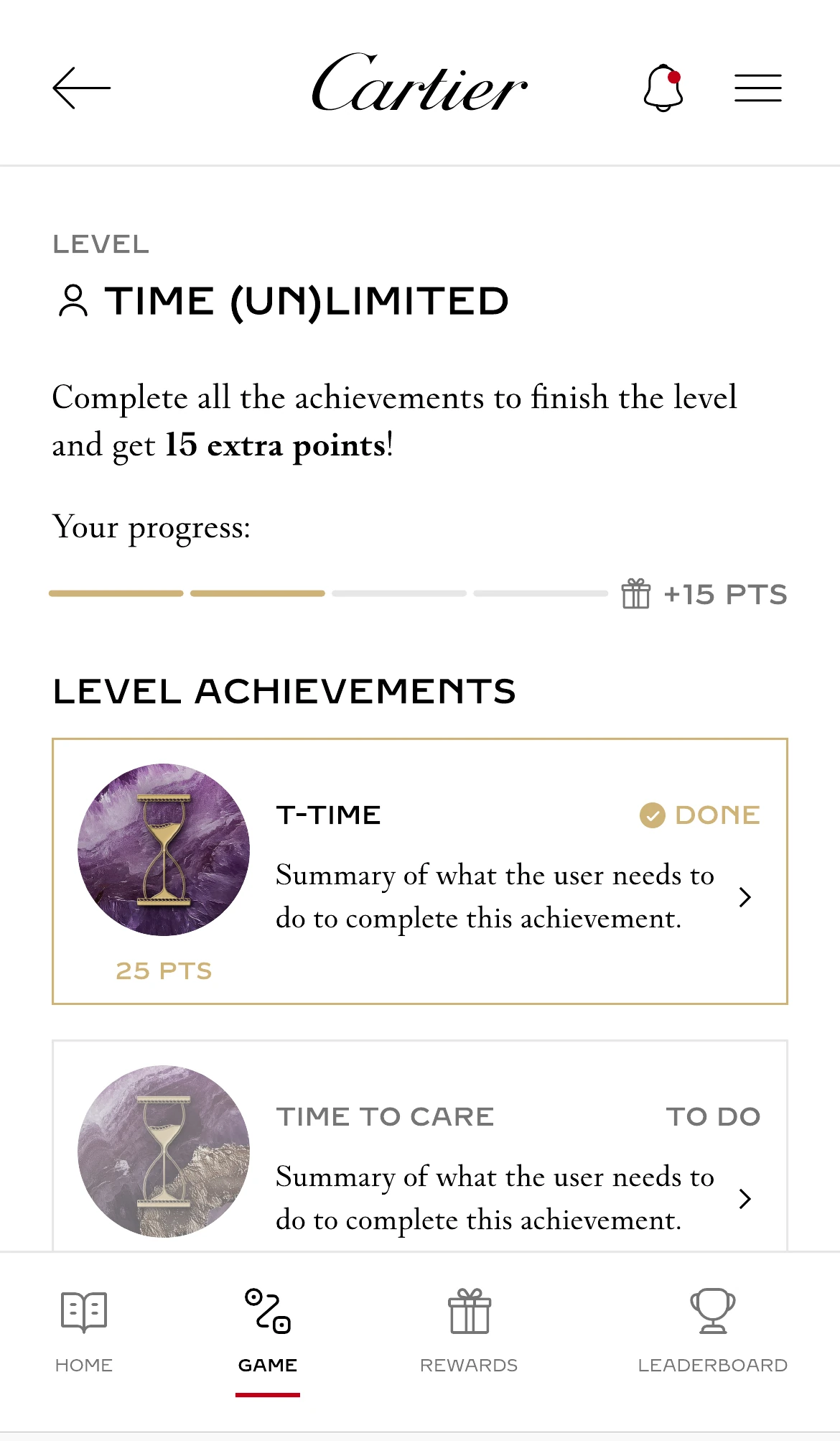
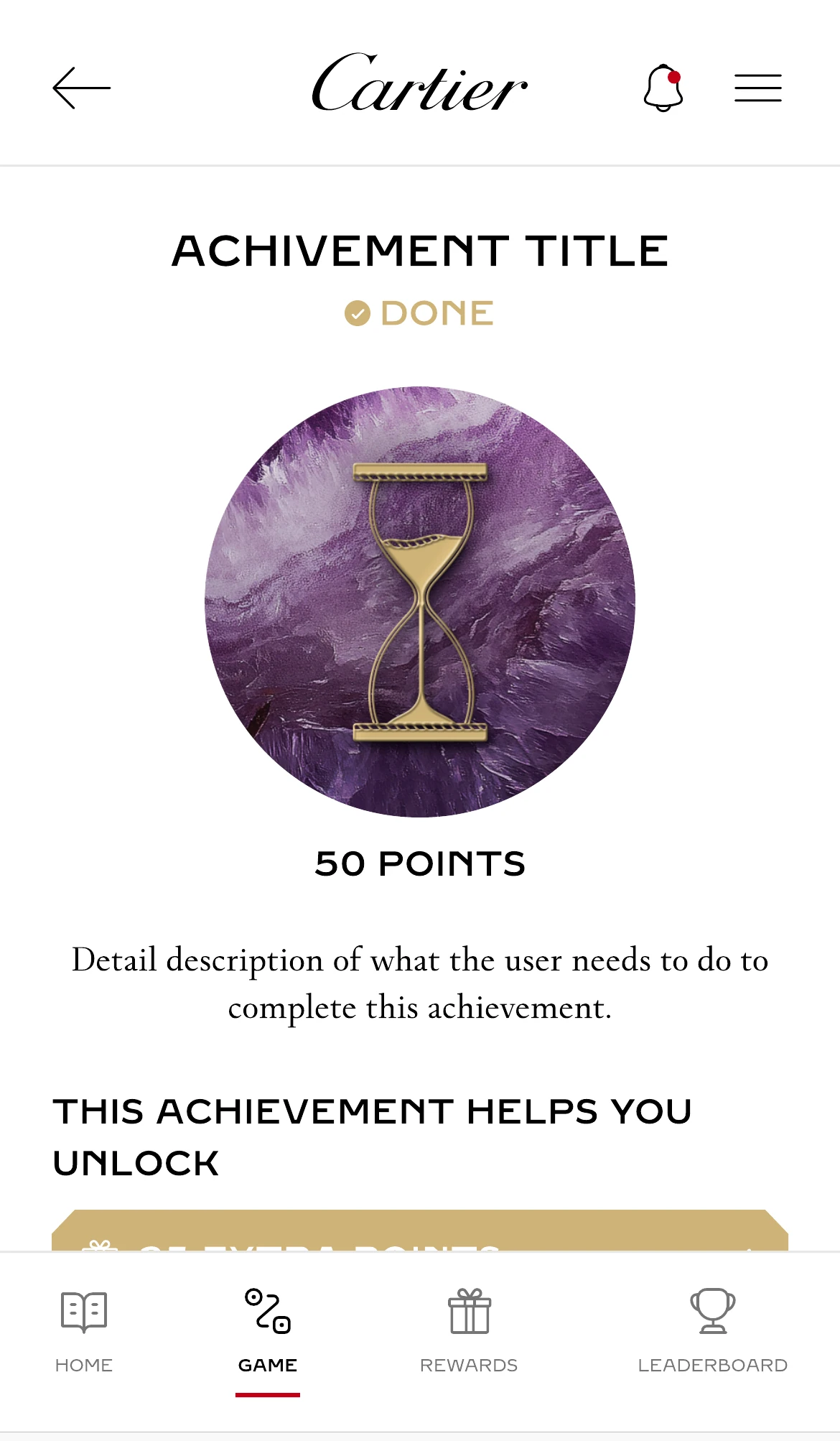
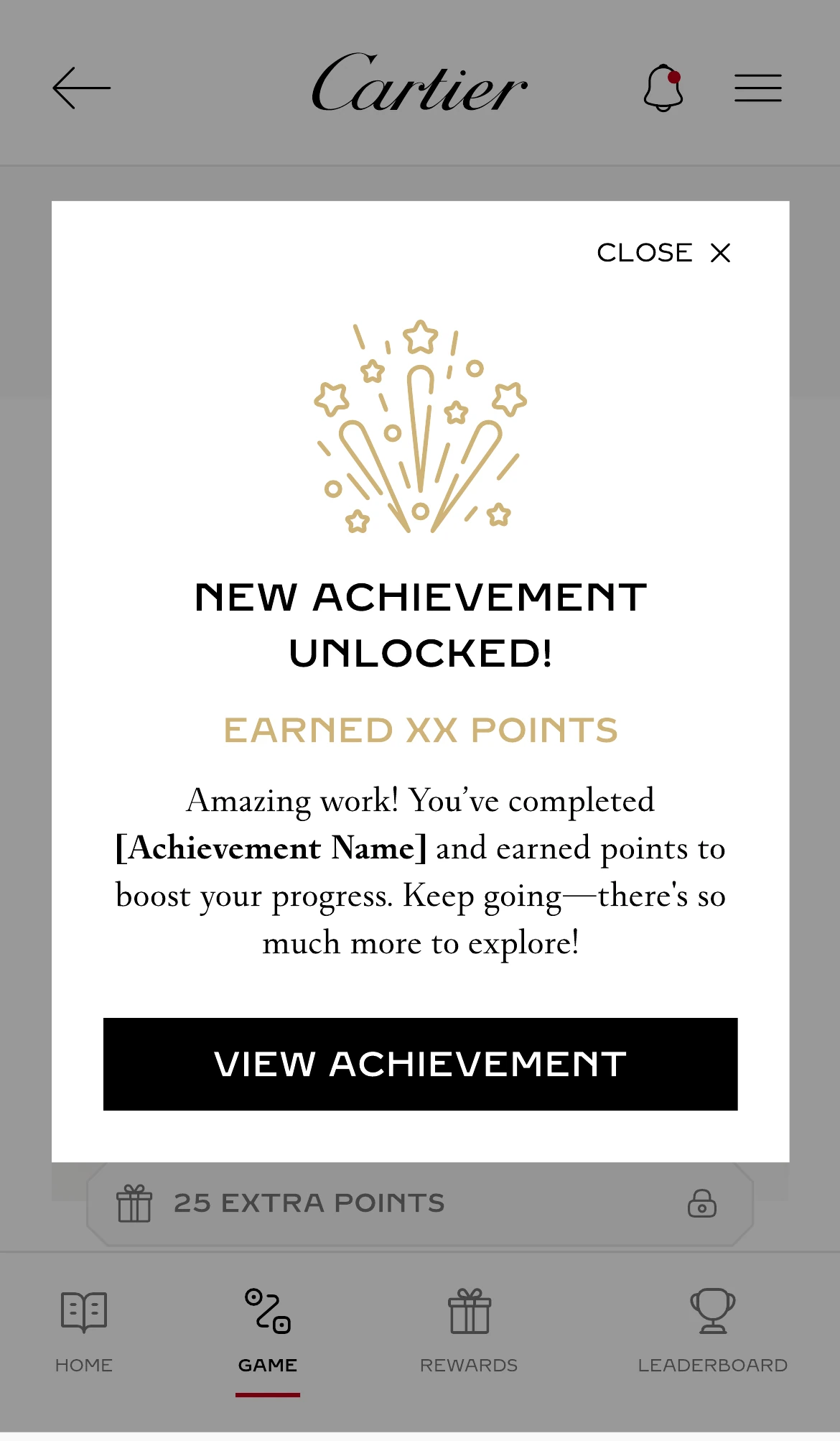
A points system fails the moment a user cannot tell what is done, what remains, and what just changed. With levels, achievements, bonuses and timed activities all in play, four different status vocabularies would have been the natural outcome.
I used a single status vocabulary everywhere: to do, done, locked, unlocked. I paired it with progress bars, explicit point values and an immediate success state. Progress, completion and feedback read as one three-step story.
Connecting achievements to rewards
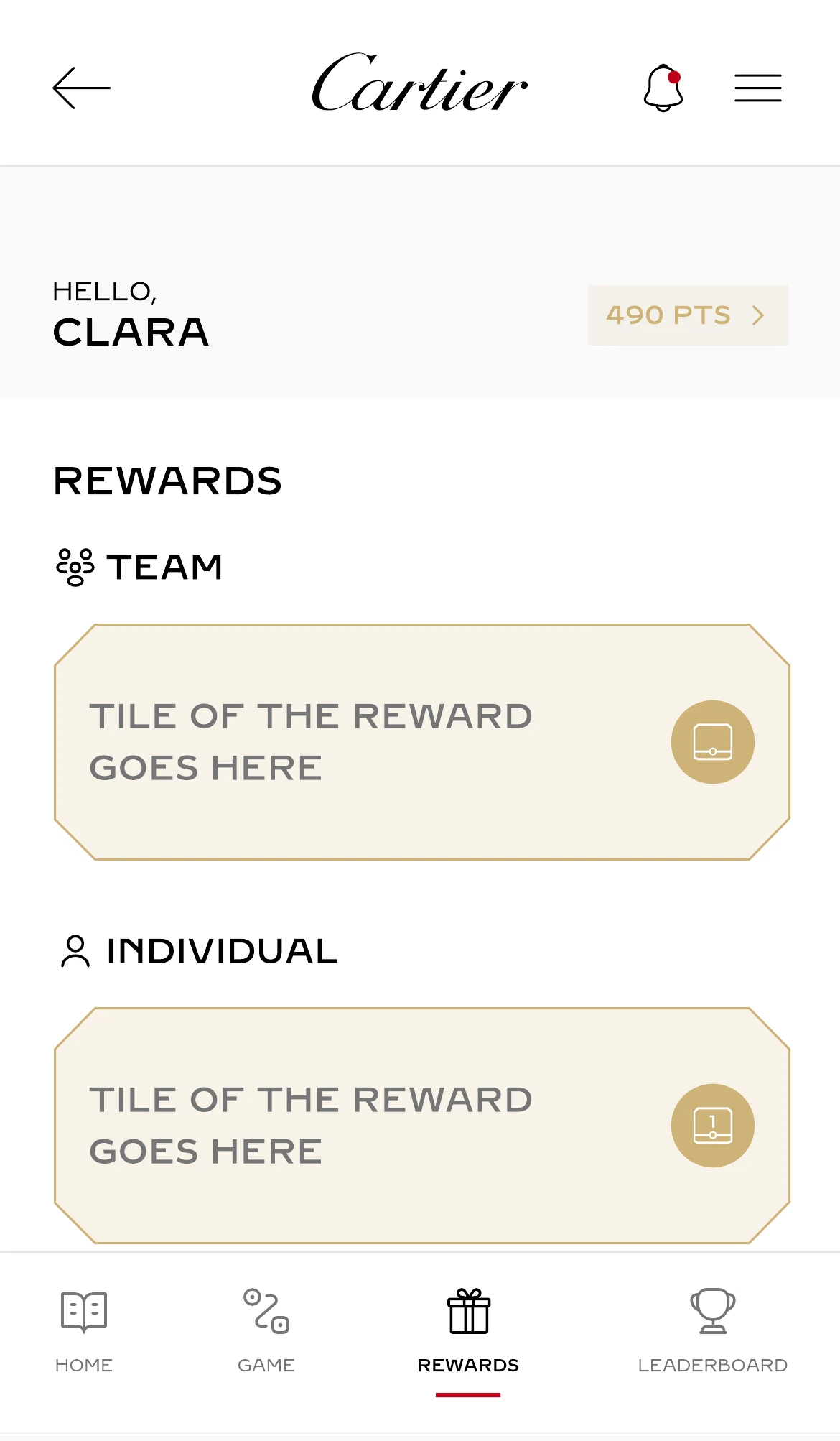
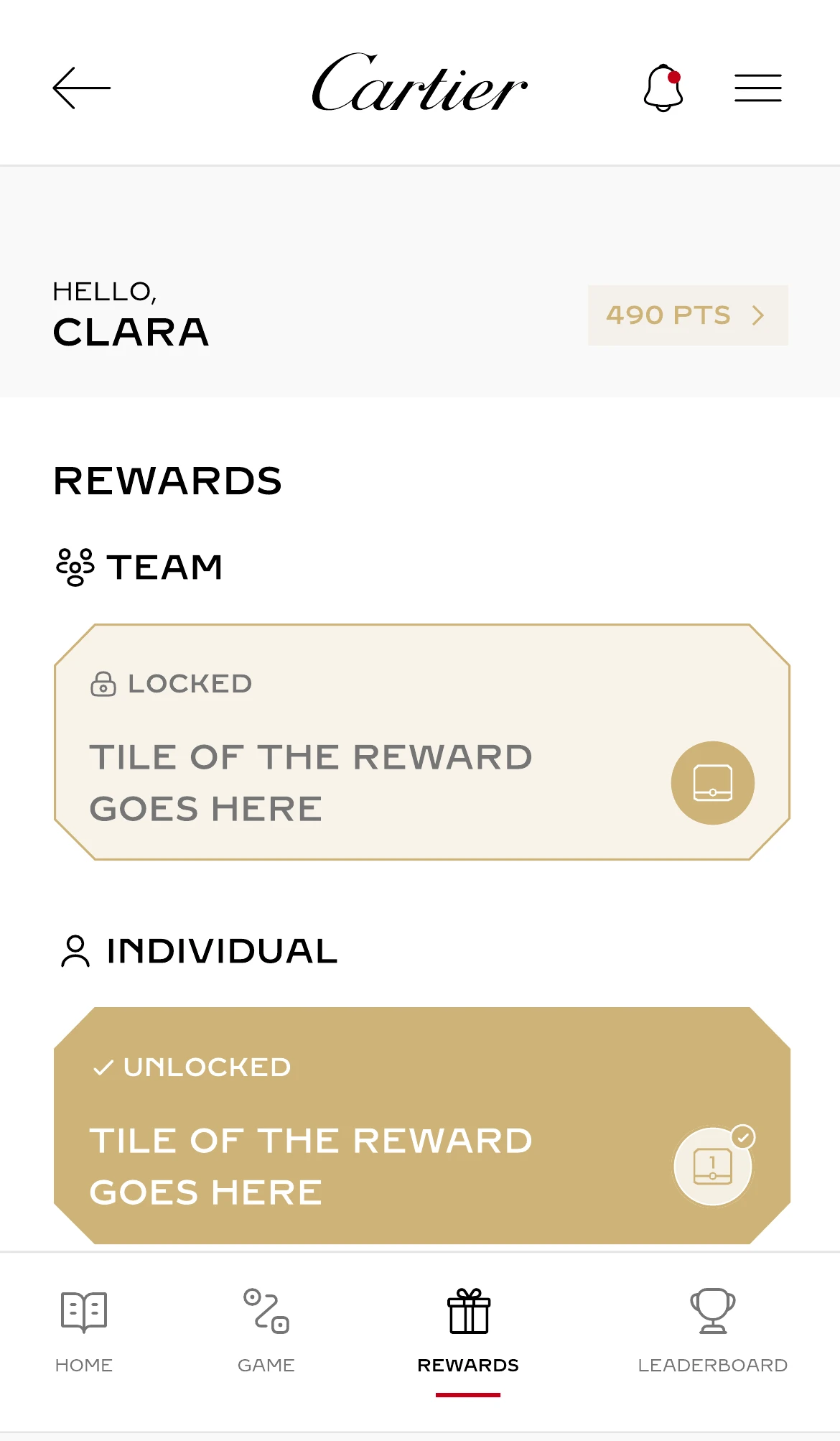
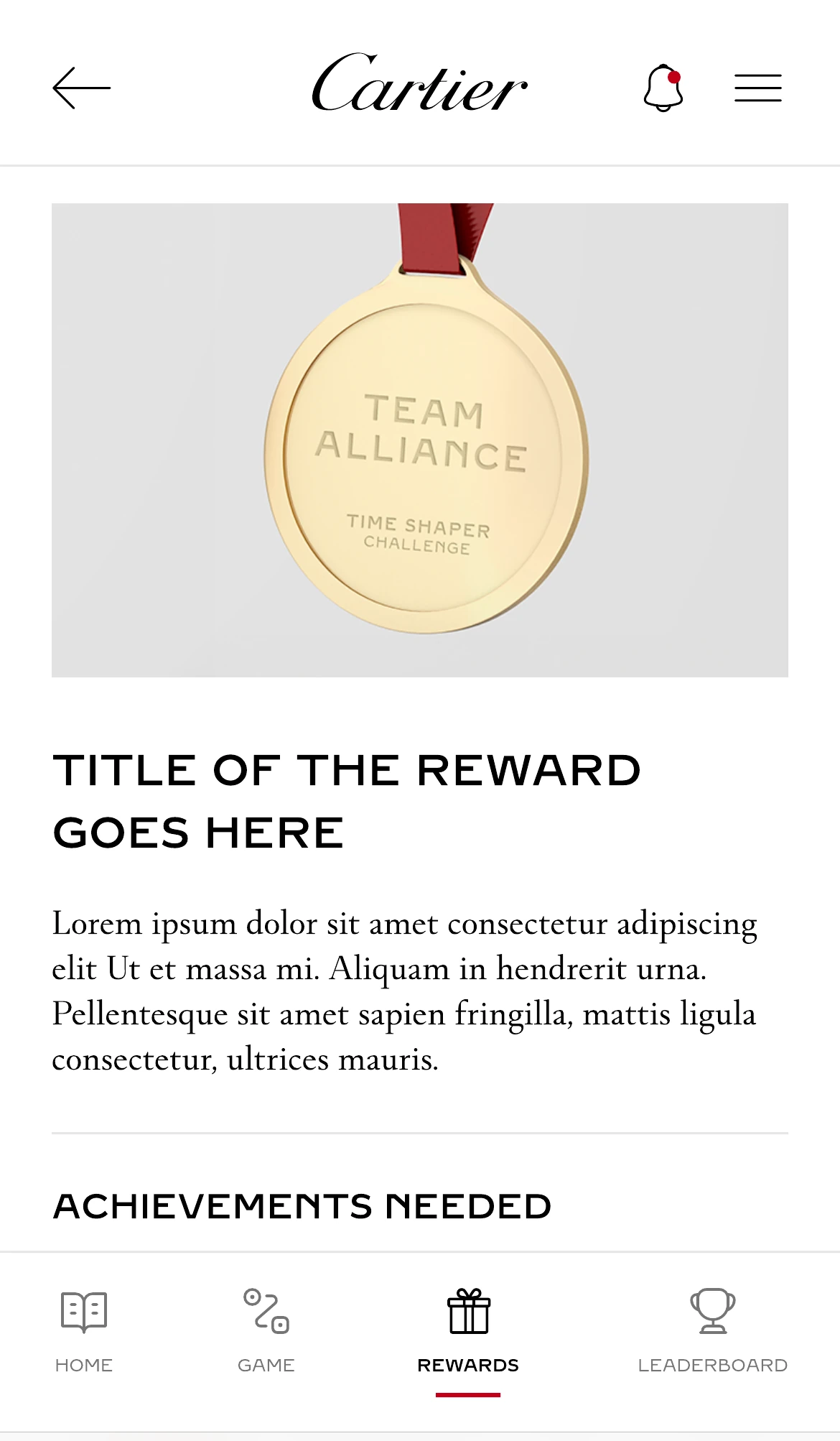
Rewards were separated into team and individual outcomes, with clear locked and unlocked states. Detail pages explained which achievements were required, so a reward never felt detached from the user’s own actions, and the main game board stayed free of every dependency.
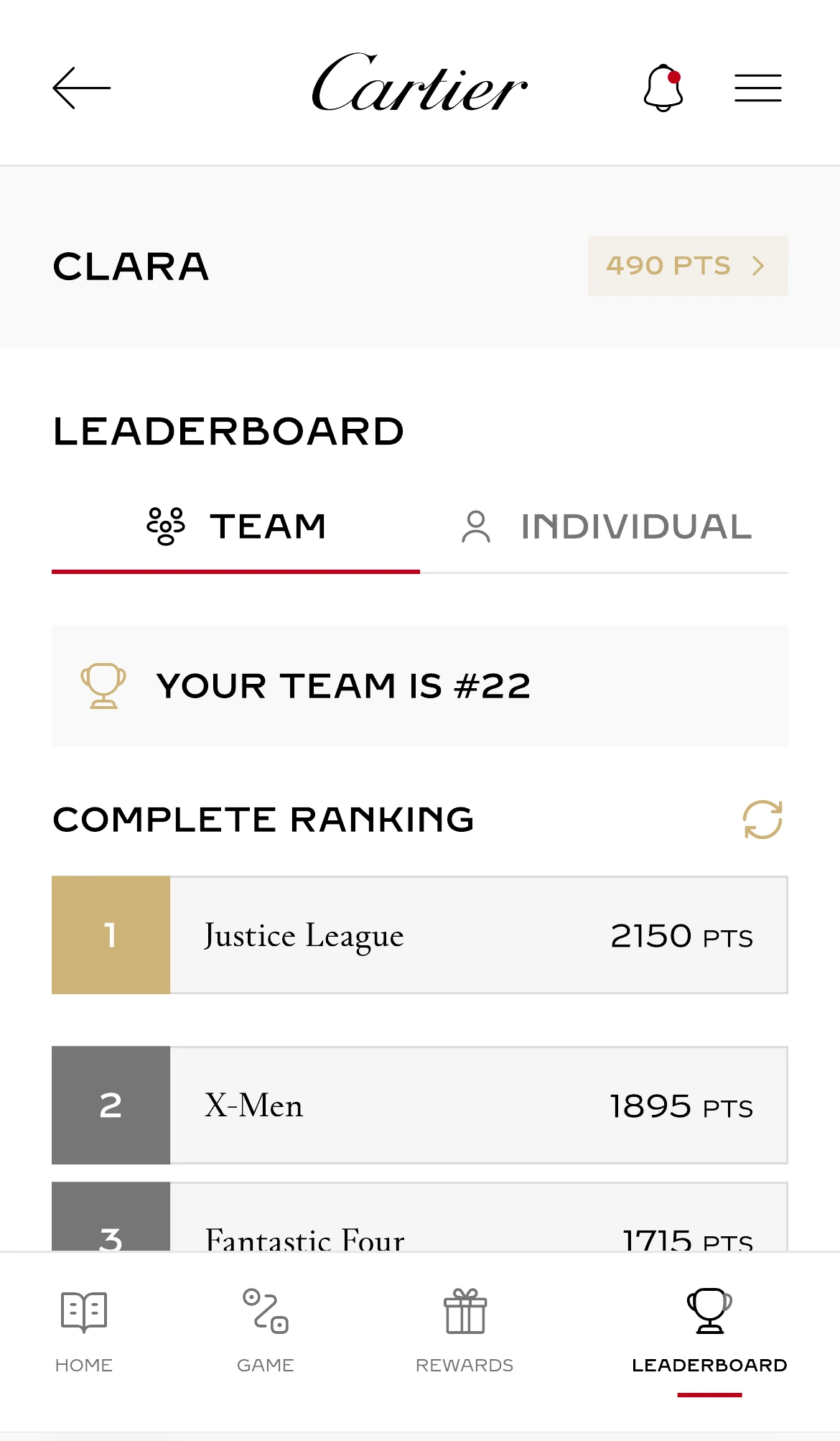
Personal rank and boutique rank, side by side
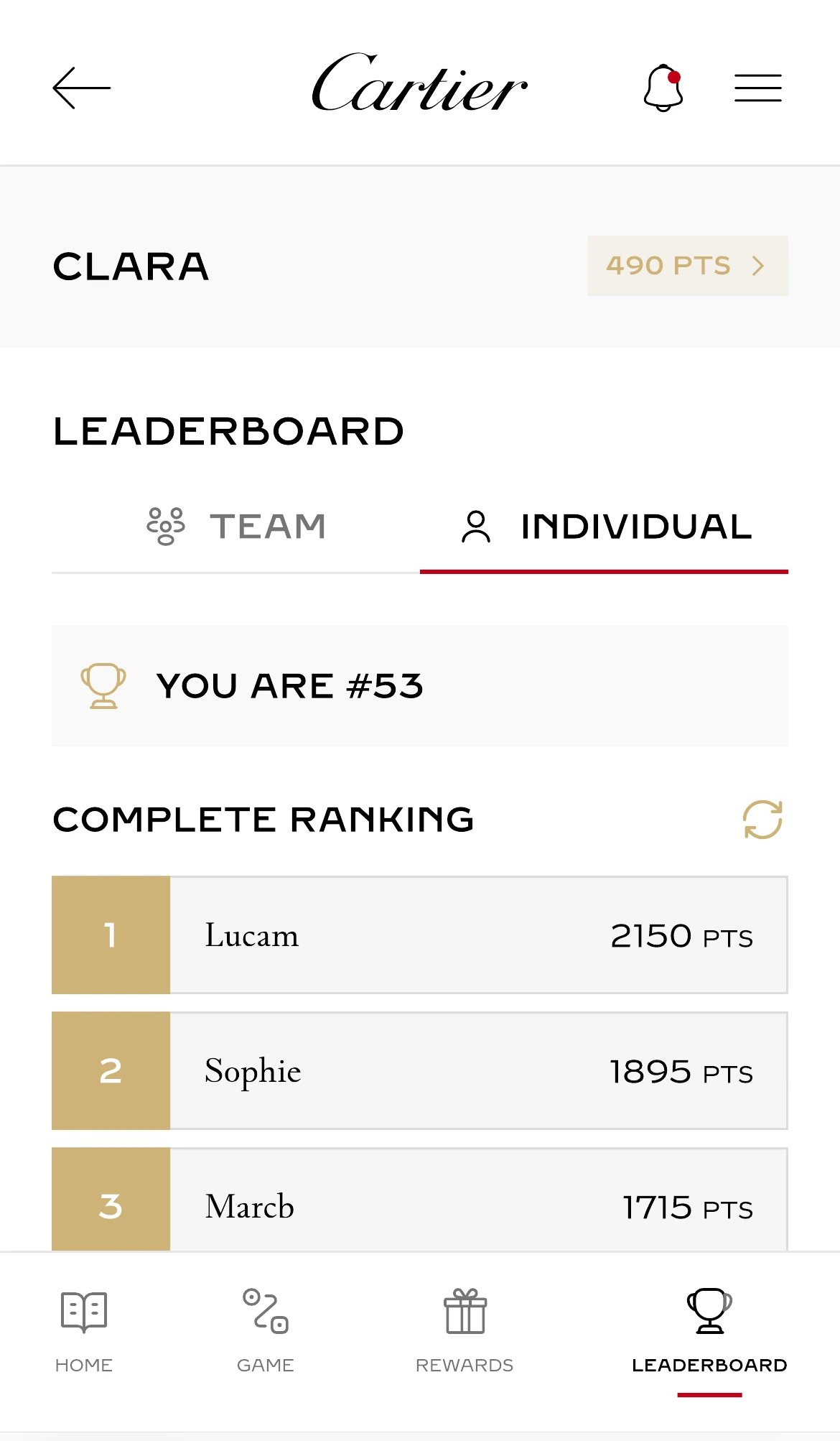
The challenge rewarded personal performance without losing the collaborative objective of the boutique. Two leaderboards showed a participant’s own rank and their team’s position, creating two forms of motivation while keeping one interaction pattern.
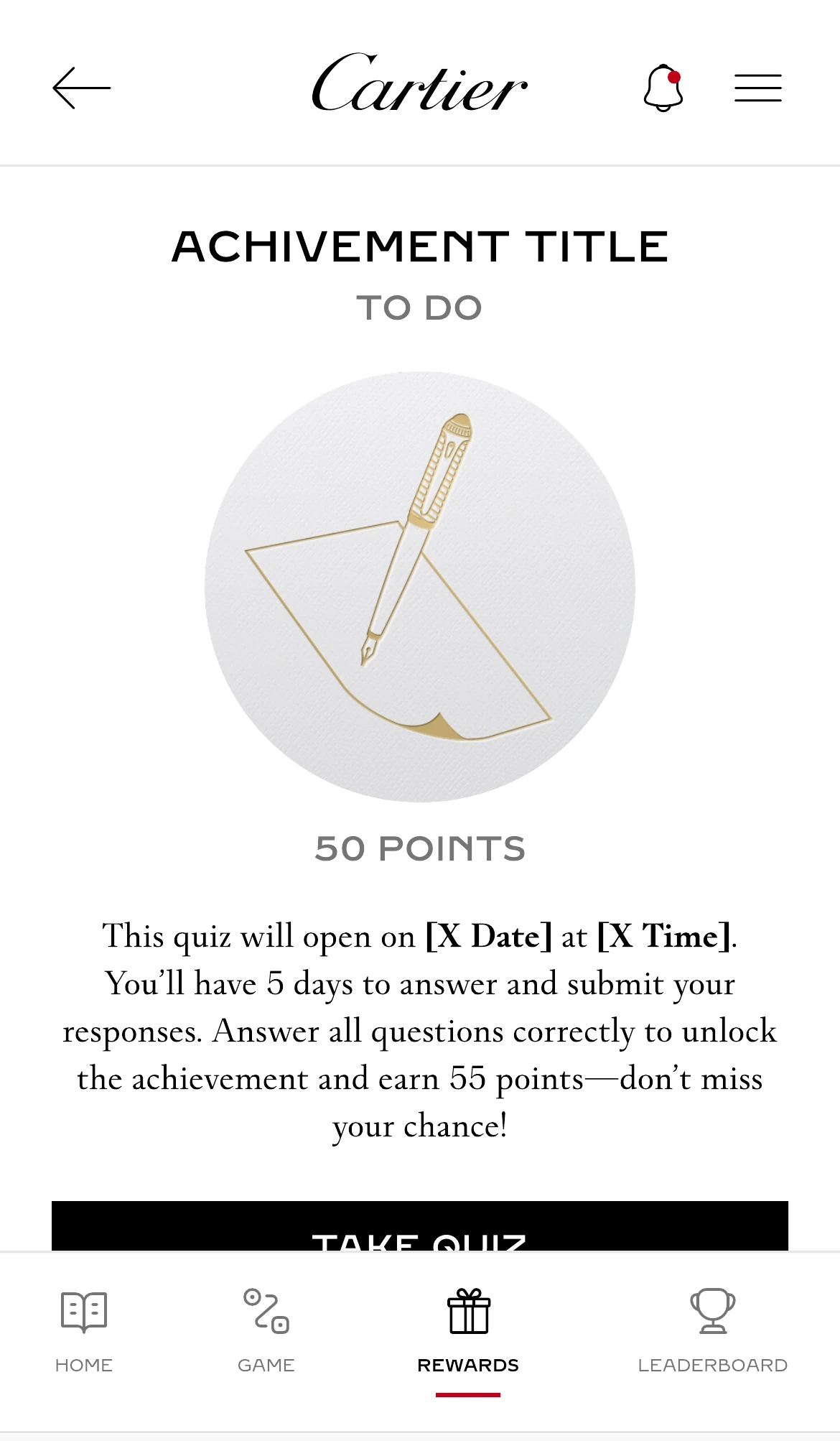
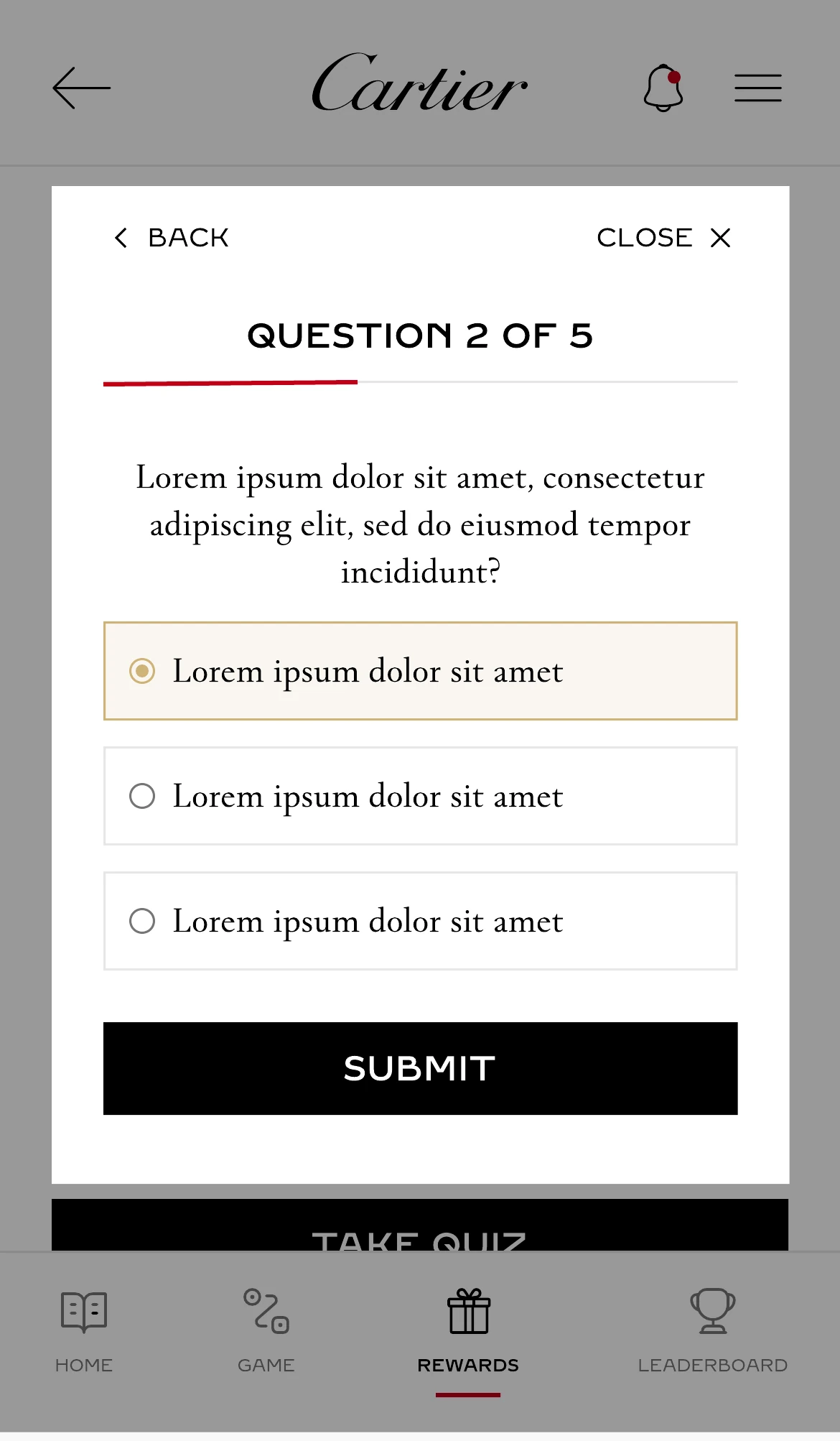
Not every achievement is earned the same way
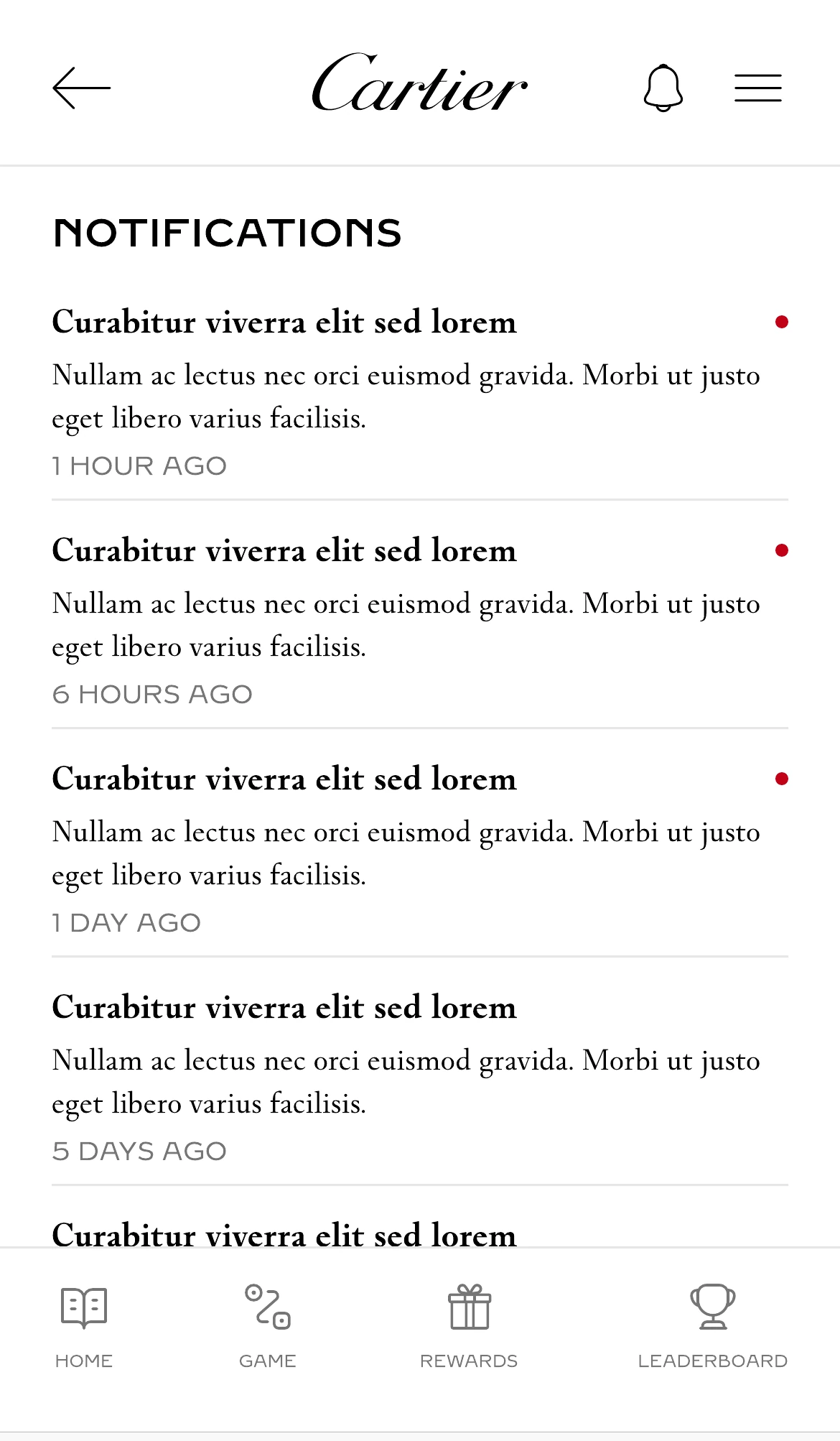
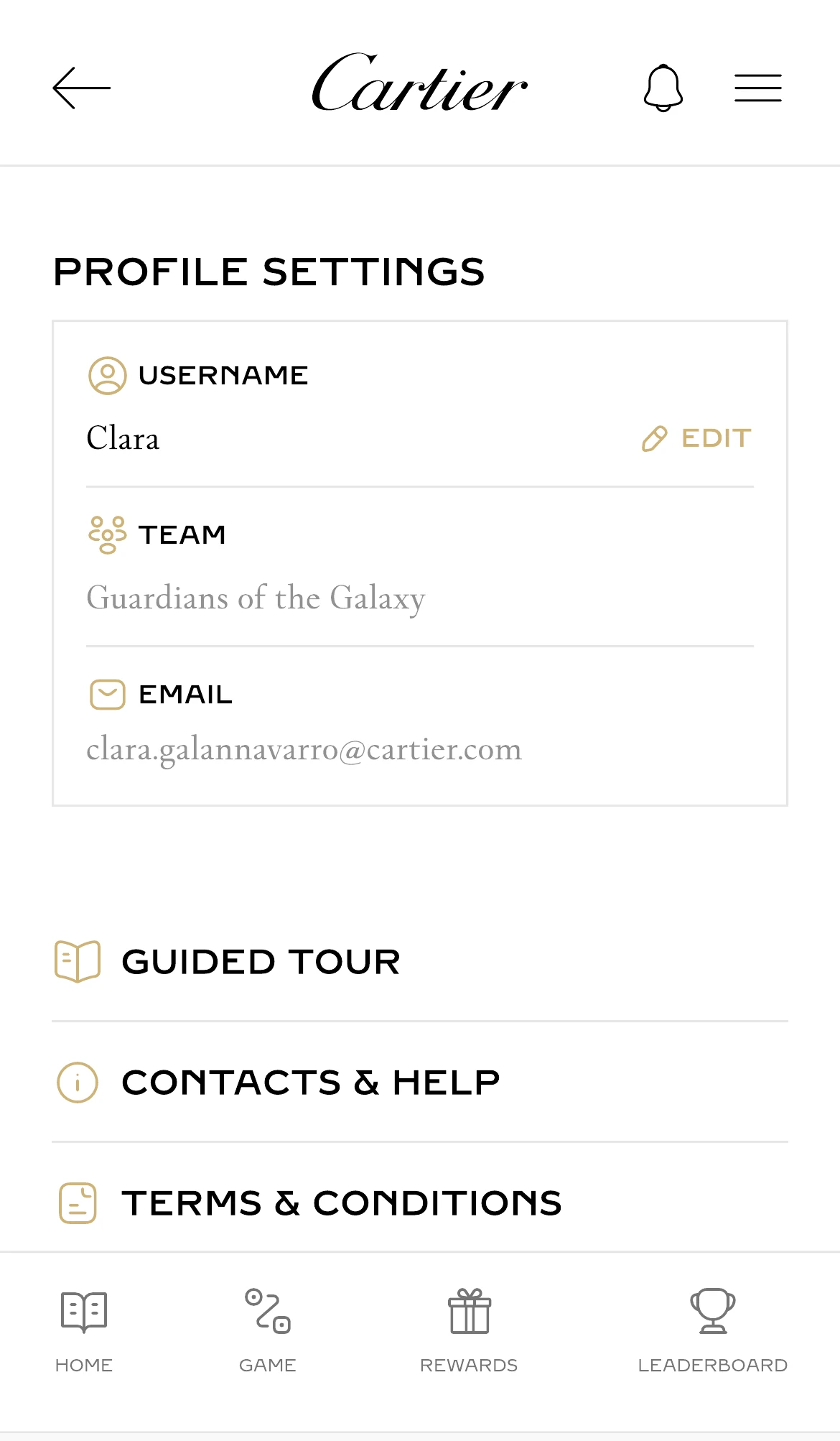
The system supported timed quizzes, content-based actions and different availability windows, while notifications and profile-level help gave users a way to recover context outside the main progression loop.
What launched, and what I can claim
The Time Shaper Challenge launched within Cartier’s Swiss retail programme in February 2025. According to POAP Studio’s internal project summary — qualitative feedback, not a measured result — the experience strengthened focus on sales goals and team dynamics.
Gamification works only when action, progress and reward are legible.
The visual language could feel premium and expressive, but a premium surface cannot replace clear states, legible dependencies and immediate feedback — those had to stay unambiguous underneath it.
If your product has more rules than screens, we should talk.